Introduction: Why AI Marketing Automation Is Dominating 2026

In 2026, businesses are no longer asking whether they should use automation—they are asking how to use it intelligently. AI-powered marketing automation in 2026 has evolved from simple email scheduling to fully integrated smart systems that manage campaigns, analyze customer behavior, and optimize performance in real time.
Companies that adopt AI-driven automation are scaling faster, reducing operational costs, and improving marketing ROI. Meanwhile, businesses relying on manual processes struggle to compete in a data-driven marketplace.
This article explains how AI-powered marketing automation works, why it matters in 2026, and how businesses can implement it effectively.
What Is AI-Powered Marketing Automation?
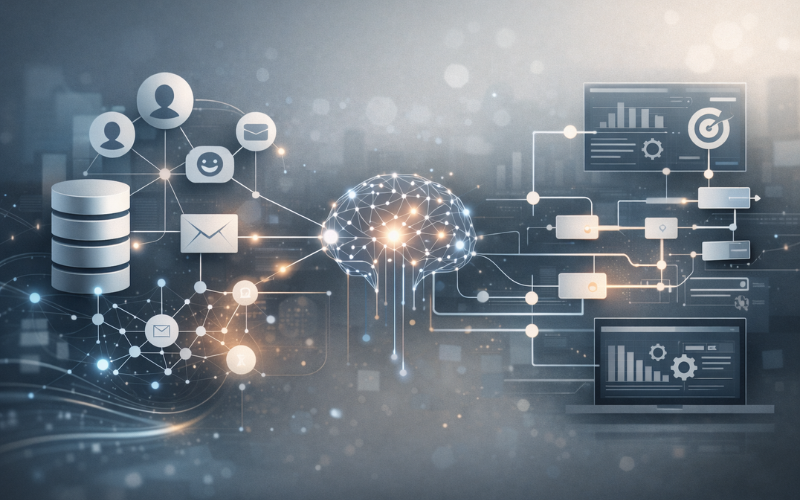
AI-powered marketing automation combines:
- Artificial intelligence
- Machine learning
- Customer data platforms
- Automated marketing workflows
Unlike traditional automation, AI systems analyze customer behavior, predict outcomes, and adjust campaigns automatically.
🔗 External reference: Salesforce explains how AI enhances marketing automation through predictive analytics and personalization.
Why AI Marketing Automation Is Essential in 2026
1️⃣ Hyper-Personalization at Scale
Consumers expect personalized experiences. AI enables businesses to:
- Deliver tailored email campaigns
- Recommend products automatically
- Customize landing pages in real time
This improves engagement and conversion rates.
2️⃣ Automated Lead Generation and Nurturing
AI systems can identify high-intent users and guide them through the sales funnel using automated lead generation processes.
Key benefits:
- Lead scoring based on behavior
- Smart segmentation
- Automated follow-up sequences
- Predictive conversion analysis
This ensures marketing teams focus on high-value prospects.
3️⃣ Smarter Marketing Workflow Automation
In 2026, marketing workflow automation goes beyond simple scheduling. AI systems:
- Optimize send times
- Adjust ad budgets automatically
- Pause underperforming campaigns
- Reallocate resources to high-performing channels
🔗 External reference: HubSpot’s automation resources highlight the impact of workflow automation on marketing performance.
Top Marketing Automation Trends in 2026
✅ AI-Driven Content Creation
AI tools assist with generating emails, blog drafts, ad copy, and social media posts.
✅ Predictive Analytics
Machine learning predicts customer behavior and purchase likelihood.
✅ Omnichannel Automation
Marketing systems now integrate email, social media, paid ads, and SMS into one intelligent workflow.
✅ Customer Journey Automation
From awareness to conversion, AI manages every stage of the customer journey automatically.
How Businesses Can Implement AI Marketing Automation

Step 1: Define Clear Goals
Before choosing tools, businesses must define:
- Lead generation targets
- Conversion goals
- Customer retention objectives
- ROI benchmarks
Step 2: Choose the Right Marketing Automation Tools
Modern marketing automation tools in 2026 offer:
- CRM integration
- AI-driven analytics
- Email and campaign automation
Ad management dashboards
Businesses should select platforms that align with their growth strategy.
Step 3: Integrate Data Sources
AI works best with clean, centralized data. Integration should include:
- Website analytics
- CRM systems
- Social media platforms
- Email marketing tools
Step 4: Monitor and Optimize
AI improves over time. Businesses must:
- Track KPIs regularly
- Adjust targeting strategies
- Optimize campaigns based on insights
Continuous improvement ensures long-term success.
Common Mistakes to Avoid
Even in 2026, businesses make automation mistakes such as:
❌ Over-automating without personalization
❌ Ignoring analytics
❌ Using too many disconnected tools
❌ Failing to train marketing teams
Smart implementation balances automation with human strategy.
Benefits of AI-Powered Marketing Automation
Businesses adopting AI automation experience:
- Increased conversion rates
- Reduced marketing costs
- Faster campaign execution
- Improved customer experience
- Higher marketing ROI optimization
AI allows businesses to scale marketing efforts without scaling workload.
Frequently Asked Questions (FAQs)
1. What is AI-powered marketing automation in 2026?
It is the use of AI-driven systems to automate and optimize marketing campaigns, lead generation, and customer journeys.
2. Is marketing automation worth it for small businesses?
Yes. AI tools are now scalable and affordable, making them accessible for SMEs.
3. How does AI improve lead generation?
AI analyzes user behavior, scores leads, and automates nurturing sequences.
4. What are the best marketing automation tools?
Leading tools include platforms that integrate CRM, analytics, and AI capabilities.
5. Can AI replace marketers?
No. AI enhances efficiency but still requires strategic oversight.
6. How can businesses measure automation success?
By tracking conversion rates, cost per lead, customer acquisition cost, and overall ROI.
Conclusion: Scaling Smarter with AI in 2026
AI-powered marketing automation in 2026 is no longer optional—it is a competitive necessity. Businesses that invest in smart automation systems gain efficiency, personalization, and measurable growth.
By combining AI tools, marketing workflow automation, and data-driven strategies, companies can scale faster while maintaining high performance and customer satisfaction.
The future of marketing belongs to businesses that automate intelligently.