
Introduction: Why Cybersecurity Is a Top Business Priority in 2026
As businesses continue to adopt cloud platforms, artificial intelligence, and automation, cybersecurity has become one of the most critical concerns in 2026. Organizations across industries are increasingly relying on secure IT services to protect sensitive data and ensure business continuity.
With the rise of AI-powered cyber threats, protecting customer and enterprise data is no longer optional. Understanding cybersecurity trends in 2026 helps businesses stay compliant, resilient, and trustworthy in an AI-driven world.
The Evolving Cyber Threat Landscape
AI-Powered Cyber Attacks
Artificial intelligence is now widely used by cybercriminals to automate attacks, exploit vulnerabilities, and bypass traditional security defenses. These advanced threats require businesses to adopt modern cybersecurity solutions rather than relying on outdated tools.
Common AI-driven threats include:
- Automated phishing campaigns
- Intelligent brute-force attacks
- Adaptive ransomware
- Deepfake-based social engineering
Why Traditional Security Models Are No Longer Enough
Legacy security systems were designed for centralized, on-premise environments. In 2026, businesses operate across cloud, hybrid, and remote infrastructures, increasing security complexity.
Companies using managed cybersecurity services gain better visibility and faster response times across distributed systems.
Zero Trust Security: A Core Strategy for 2026
What Is the Zero Trust Security Model?
The zero trust security model ensures that no user, device, or application is trusted by default. This approach is especially important for organizations using cloud platforms and remote work environments.
Businesses implementing zero trust often combine it with enterprise IT infrastructure solutions to strengthen overall security.
AI in Cybersecurity: Defense Meets Intelligence
AI-Powered Threat Detection
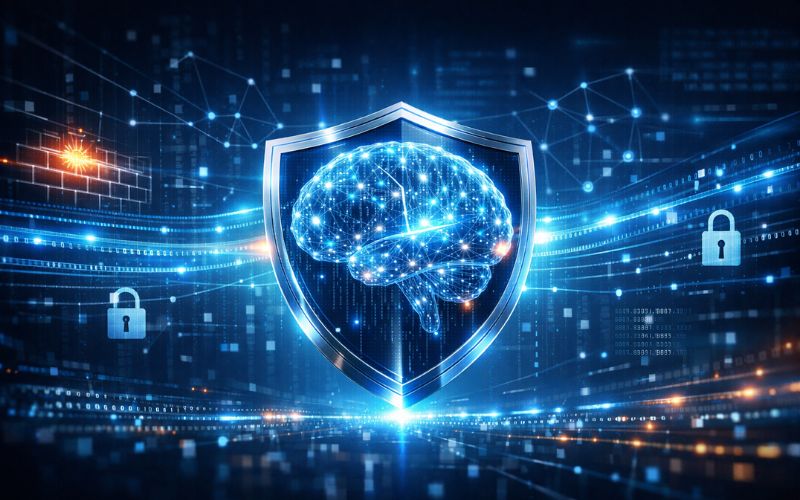
AI-powered security platforms analyze behavior patterns and detect anomalies in real time. Businesses leveraging AI-driven cybersecurity tools can identify threats faster and reduce operational risks.
Security Automation and Response
Security automation enables systems to isolate threats, block malicious traffic, and alert IT teams automatically. Automation works best when integrated with advanced IT automation solutions.
Cloud Security Best Practices for Businesses
Protecting Data in Cloud Environments
Cloud adoption requires strong security measures. Businesses using secure cloud computing services are better equipped to protect sensitive data and meet compliance requirements.
Best practices include:
- Data encryption
- Identity and access management (IAM)
- Secure APIs and integrations
- Continuous monitoring
Ransomware and Data Protection Strategies
Ransomware attacks remain a serious threat in 2026. A strong data protection strategy includes backups, endpoint security, and user awareness training.
Businesses investing in enterprise data protection solutions can minimize downtime and financial losses.
Cybersecurity for Small and Medium Businesses
Small and medium-sized businesses are frequent targets due to limited security resources. Affordable IT security services for small businesses help close this gap.
Key steps include:
- Multi-factor authentication (MFA)
- Cloud-based security tools
- Employee security awareness training
Compliance, Privacy, and Data Governance
Meeting data privacy regulations is critical for maintaining customer trust. Businesses should align cybersecurity strategies with compliance and governance best practices.
Partnering with a trusted IT consulting company helps ensure regulatory compliance and secure data handling.
How Businesses Can Build a Strong Cybersecurity Strategy in 2026
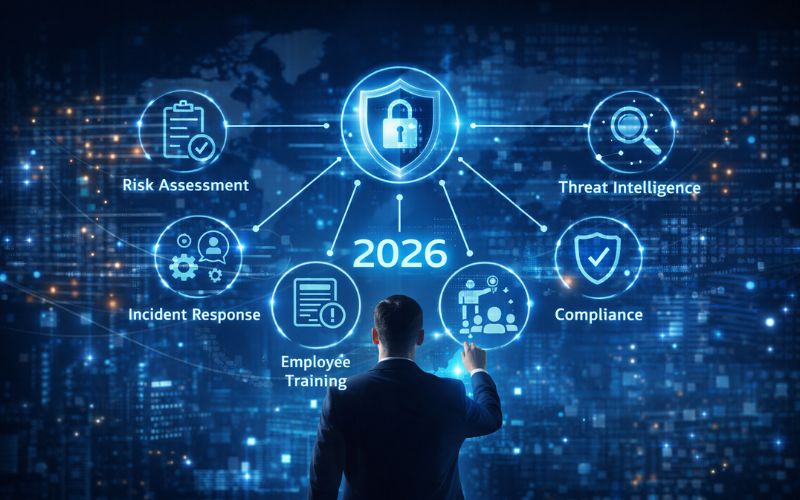
To protect data effectively in an AI-driven world, organizations should:
- Conduct regular risk assessments
- Implement zero trust security
- Use AI-powered cybersecurity tools
- Secure cloud and hybrid environments
- Partner with experienced cybersecurity providers
If you’re planning to strengthen your security posture, working with a reliable cybersecurity and IT partner can make the process seamless.
Frequently Asked Questions (FAQs)
1. What are the biggest cybersecurity threats in 2026?
AI-powered attacks, ransomware, cloud misconfigurations, and phishing are the most common threats.
2. How does AI improve cybersecurity?
AI enables faster threat detection, predictive analysis, and automated response.
3. What is zero trust security?
Zero trust continuously verifies access and reduces risk in cloud and remote environments.
4. Is cybersecurity important for small businesses?
Yes. SMBs are frequent targets and must adopt basic security measures.
5. How can businesses protect cloud data?
Through encryption, access controls, continuous monitoring, and audits.
6. Should businesses outsource cybersecurity?
Many businesses benefit from managed cybersecurity services for 24/7 protection.
Conclusion: Securing the Future in an AI-Driven Digital World
Cybersecurity in 2026 is a business-critical priority. As AI reshapes digital transformation, organizations must adopt adaptive, intelligent security strategies.
By combining zero trust models, AI-powered defenses, cloud security best practices, and automation, businesses can protect data, maintain trust, and support long-term growth.