Introduction: Why IT Infrastructure Planning Is Critical in 2026
As organizations enter 2026, IT infrastructure is no longer a back-office function it is the foundation of business growth, security, and digital transformation. Companies are operating in an environment shaped by cloud adoption, artificial intelligence, automation, and increasing cyber threats.
Businesses that fail to modernize their IT infrastructure risk performance issues, security gaps, and scalability limitations. Understanding IT infrastructure trends in 2026 allows decision-makers to invest in technology that supports long-term resilience, efficiency, and innovation.
This article explores the key IT infrastructure trends businesses must prepare for in 2026 and how organizations can stay ahead in a rapidly evolving digital landscape.
1. Cloud-First and Hybrid Infrastructure Models
Why Cloud Strategy Matters in 2026
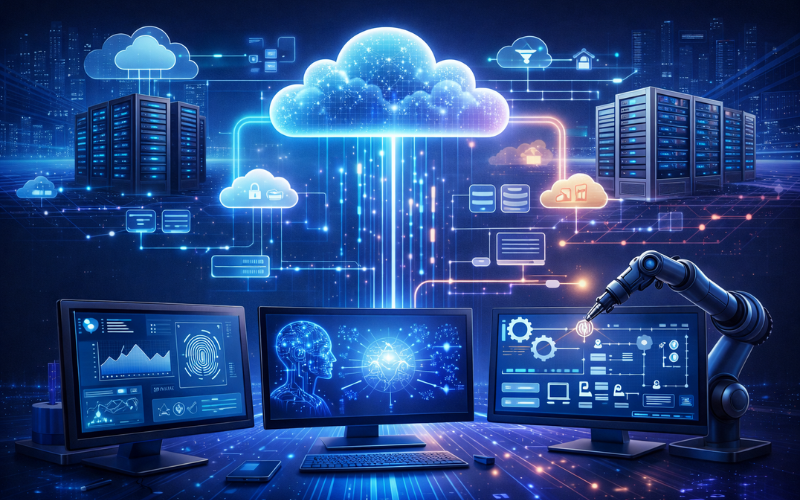
Cloud computing continues to dominate IT infrastructure planning. In 2026, businesses are prioritizing cloud-first strategies that allow faster deployment, flexible scaling, and cost optimization.
Rather than relying on a single environment, many organizations are adopting hybrid and multi-cloud architectures to balance performance, compliance, and cost.
Key benefits include:
- Improved scalability and agility
- Reduced infrastructure costs
- Enhanced disaster recovery
- Support for remote and global teams
2. AI-Driven IT Operations (AIOps)
How AI Is Transforming IT Infrastructure
One of the fastest-growing IT infrastructure trends in 2026 is the rise of AIOps (Artificial Intelligence for IT Operations). AIOps platforms use machine learning and analytics to monitor systems, predict failures, and automate issue resolution.
Benefits of AIOps include:
- Predictive maintenance
- Faster incident response
- Reduced system downtime
- Improved infrastructure visibility
AI-driven infrastructure enables IT teams to move from reactive troubleshooting to proactive system management.
3. IT Automation and Infrastructure as Code (IaC)
Why Automation Is No Longer Optional
Automation is redefining how IT environments are deployed and managed. Infrastructure as Code (IaC) allows businesses to provision servers, networks, and cloud resources using code rather than manual processes.
Advantages of IT automation include:
- Faster deployments
- Reduced human error
- Consistent configurations
- Better collaboration between IT and DevOps teams
In 2026, automation is essential for organizations managing complex, distributed infrastructure.
4. Cybersecurity as a Core Infrastructure Layer
Security-First Infrastructure Design
With cyber threats becoming more advanced, cybersecurity is now embedded directly into IT infrastructure planning. Businesses are shifting toward security-by-design approaches rather than adding protection after deployment.
Key cybersecurity infrastructure trends include:
- Zero Trust security models
- Identity and access management (IAM)
- Continuous monitoring and threat detection
- Secure cloud configurations
Organizations that integrate security at the infrastructure level reduce risk and improve compliance.
5. Edge Computing and Decentralized Systems
Why Edge Computing Is Growing
Edge computing processes data closer to where it is generated, reducing latency and improving real-time performance. This trend is especially important for industries using IoT, AI analytics, and time-sensitive applications.
Use cases include:
- Smart manufacturing
- Healthcare monitoring
- Autonomous systems
- Real-time customer experiences
Edge computing complements cloud infrastructure by enabling faster, localized decision-making.

6. Scalable and Modular Infrastructure Architecture
Preparing Infrastructure for Business Growth
Scalability is a top priority in 2026. Businesses must ensure their IT infrastructure can grow without major redesigns or service interruptions.
Modern infrastructure focuses on:
- Modular architecture
- Microservices and containerization
- Load balancing
- Performance optimization
Scalable infrastructure supports innovation while controlling operational costs.
7. Sustainability and Green IT Infrastructure
Energy-Efficient Technology Investments
Sustainability is becoming a major consideration in IT infrastructure planning. Businesses are investing in energy-efficient data centers, optimized cloud usage, and environmentally responsible IT practices.
Benefits of sustainable IT infrastructure include:
- Reduced energy costs
- Lower carbon footprint
- Improved brand reputation
- Compliance with environmental regulations
Green IT strategies align technology investments with long-term business responsibility.
How Businesses Can Prepare for IT Infrastructure Trends in 2026
To stay competitive, businesses should:
- Review current infrastructure gaps
- Develop a clear cloud and automation strategy
- Invest in AI-driven IT tools
- Prioritize cybersecurity and compliance
- Partner with experienced IT service providers
A proactive approach to infrastructure planning ensures stability, security, and scalability.
Frequently Asked Questions (FAQs)
1. What are the top IT infrastructure trends in 2026?
Cloud-first strategies, AI-driven operations, automation, cybersecurity integration, and edge computing are the most important trends.
2. Why is AIOps important for businesses?
AIOps improves system reliability, reduces downtime, and enables proactive infrastructure management.
3. How does cloud infrastructure support business growth?
Cloud infrastructure provides scalability, flexibility, and cost efficiency compared to traditional systems.
4. Is cybersecurity part of IT infrastructure planning?
Yes. Security is now a foundational component of modern IT infrastructure.
5. What industries benefit most from edge computing?
Manufacturing, healthcare, logistics, and IoT-driven industries benefit the most.
6. How can small businesses modernize IT infrastructure?
By adopting cloud services, automation tools, and managed IT solutions.
Conclusion: Building Future-Ready IT Infrastructure
The future of IT infrastructure in 2026 is cloud-driven, intelligent, automated, and secure. Businesses that align their technology strategy with emerging trends will be better equipped to handle growth, cyber risks, and digital transformation challenges.
Investing in modern IT infrastructure today allows organizations to remain agile, competitive, and resilient in the years ahead.