Introduction: Why Performance Marketing Is Critical in 2026
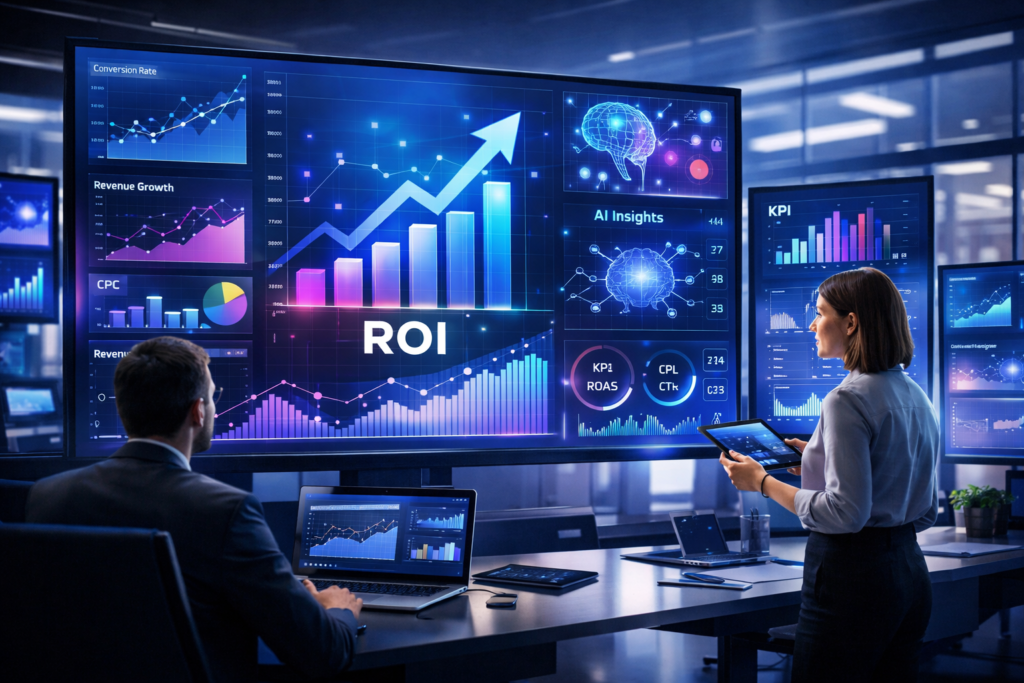
In 2026, businesses are no longer willing to invest in marketing without clear results. Every campaign, click, and conversion must be measurable. This shift has made performance marketing in 2026 one of the most important strategies for driving growth.
Unlike traditional marketing, performance marketing focuses on results-based outcomes where businesses pay for actual performance such as clicks, leads, or conversions. This approach ensures that marketing budgets are used efficiently while delivering measurable ROI.
With advancements in AI, analytics, and automation, performance marketing has become more precise, scalable, and effective than ever before.
What Is Performance Marketing?
Performance marketing is a digital marketing strategy where advertisers pay only when specific actions are completed, such as:
- Clicks (PPC advertising)
- Leads
- Sales
- App downloads
It combines multiple channels, including:
- Search engine advertising
- Social media ads
- Display advertising
- Affiliate marketing
Why Performance Marketing Is Growing in 2026
1️⃣ Data-Driven Decision Making
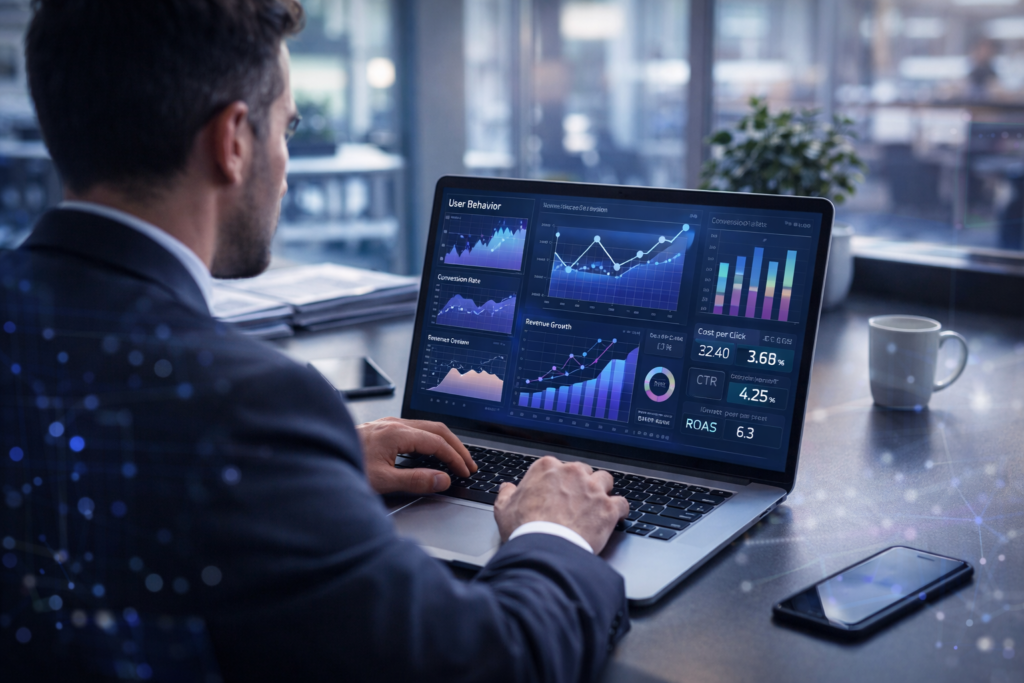
Modern marketing relies heavily on data. Businesses now use marketing analytics tools to:
- Track user behavior
- Measure campaign performance
- Optimize strategies in real time
This ensures every decision is backed by data rather than assumptions.
2️⃣ Better ROI and Budget Control
Performance marketing allows businesses to:
- Pay only for results
- Optimize campaigns continuously
- Reduce wasted ad spend
This makes it one of the most cost-effective marketing approaches.
3️⃣ AI and Automation in Advertising
AI-powered tools now:
- Optimize ad targeting
- Adjust bids automatically
- Predict user behavior
- Improve conversion rates
Key Performance Marketing Channels in 2026
1️⃣ Search Engine Advertising (PPC)
Pay-per-click (PPC) advertising remains one of the most effective channels.
Benefits:
- High intent audience
- Immediate visibility
- Measurable results
2️⃣ Social Media Advertising
Platforms like social media offer highly targeted advertising options based on user behavior, interests, and demographics.
3️⃣ Display and Programmatic Advertising
Programmatic ads use AI to automate ad buying and placement, ensuring better targeting and efficiency.
4️⃣ Affiliate and Influencer Marketing
Businesses partner with affiliates or creators who promote products and earn commissions based on performance.
Top Performance Marketing Strategies in 2026
1.Focus on Conversion Rate Optimization (CRO)
Driving traffic is not enough—businesses must convert that traffic.
Key tactics:
- Optimized landing pages
- Clear CTAs
- A/B testing
2️. Use First-Party Data for Targeting
With increasing privacy regulations, businesses rely on first-party data to improve targeting and personalization.
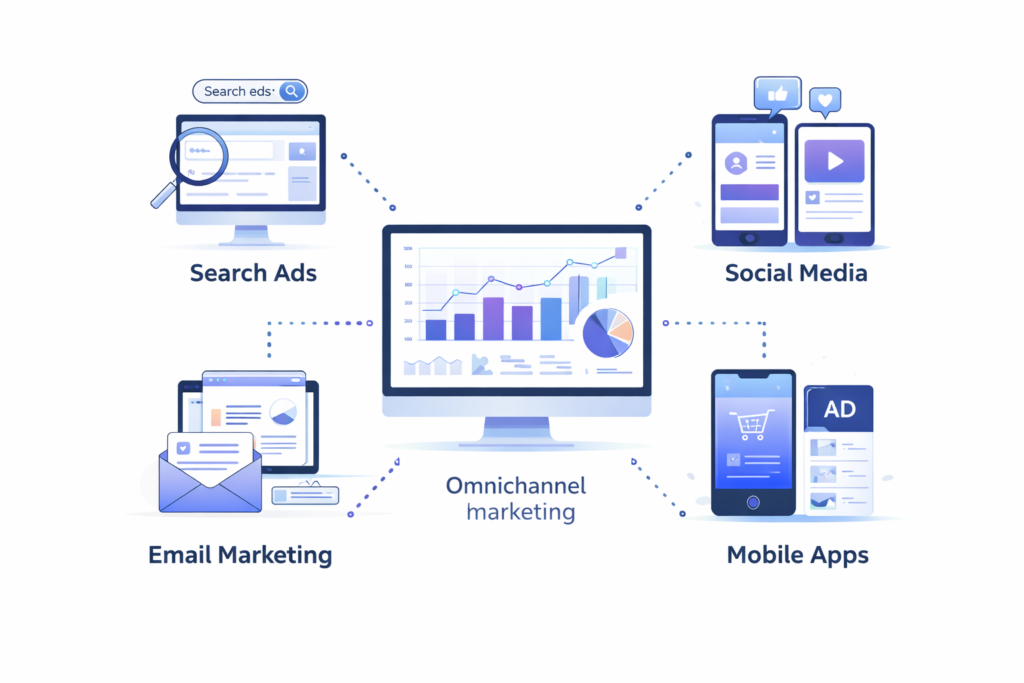
3️. Omnichannel Campaign Integration
Successful campaigns combine:
- Search ads
- Social media
- Email marketing
- Retargeting
This creates a seamless customer journey.
4️.Real-Time Campaign Optimization
Performance marketing allows continuous improvement through:
- Live analytics
- Budget reallocation
- Audience refinement
Common Mistakes to Avoid
Businesses often fail due to:
❌ Ignoring data insights
❌ Poor audience targeting
❌ Not optimizing landing pages
❌ Over-reliance on one channel
❌ Lack of testing and experimentation
Avoiding these mistakes improves campaign success.
How to Build a Successful Performance Marketing Strategy
To succeed in 2026, businesses should:
- Define clear KPIs (leads, sales, ROI)
- Choose the right channels
- Invest in analytics tools
- Continuously test and optimize
- Align marketing with business goals
A structured approach ensures consistent growth.
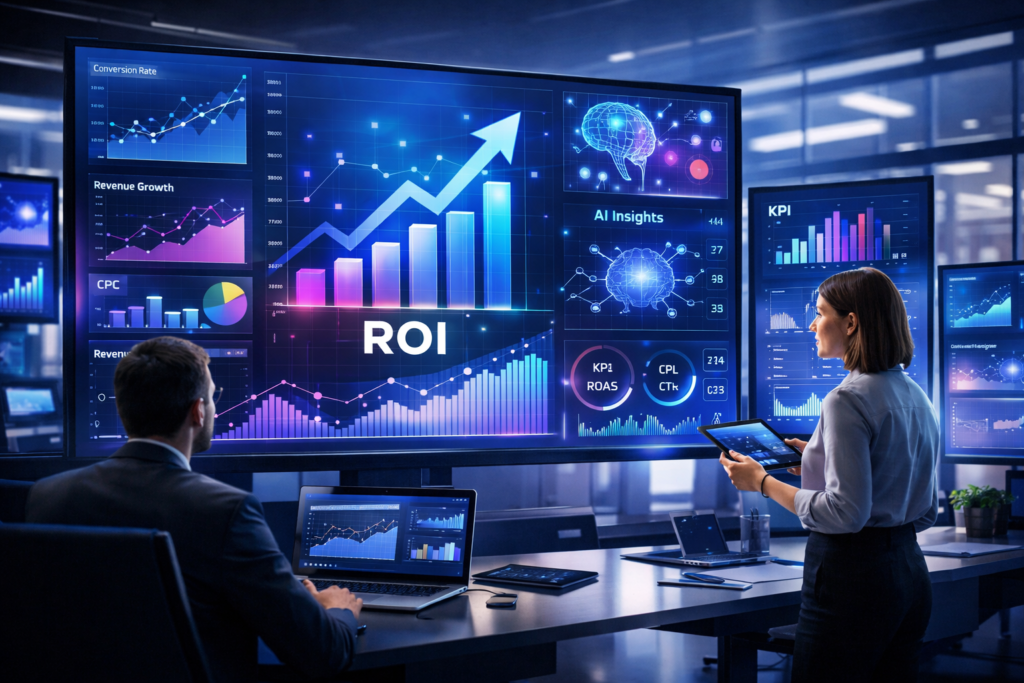
Measuring ROI in Performance Marketing
Key Metrics to Track
- Cost Per Click (CPC)
- Cost Per Acquisition (CPA)
- Conversion Rate
- Return on Ad Spend (ROAS)
- Customer Lifetime Value (CLV)
Tracking these metrics helps businesses understand what works and where to improve.
Frequently Asked Questions (FAQs)
1. What is performance marketing in 2026?
It is a results-driven marketing approach where businesses pay for measurable outcomes like clicks or conversions.
2. How is performance marketing different from traditional marketing?
Traditional marketing focuses on visibility, while performance marketing focuses on measurable results.
3. Which channels are best for performance marketing?
Search ads, social media, display ads, and affiliate marketing are the most effective.
4. Is performance marketing suitable for small businesses?
Yes. It allows controlled budgets and measurable ROI.
5. What tools are used in performance marketing?
Analytics platforms, ad management tools, and AI-driven optimization systems.
6. How can businesses improve ROI?
By optimizing targeting, testing campaigns, and improving conversion rates.
Conclusion: Driving Growth with Data-Driven Marketing
Performance marketing in 2026 is redefining how businesses approach advertising. By focusing on measurable results, data-driven strategies, and continuous optimization, companies can maximize ROI and achieve sustainable growth.
Businesses that embrace performance marketing gain better control over their budgets, improve campaign efficiency, and stay competitive in a rapidly evolving digital landscape.